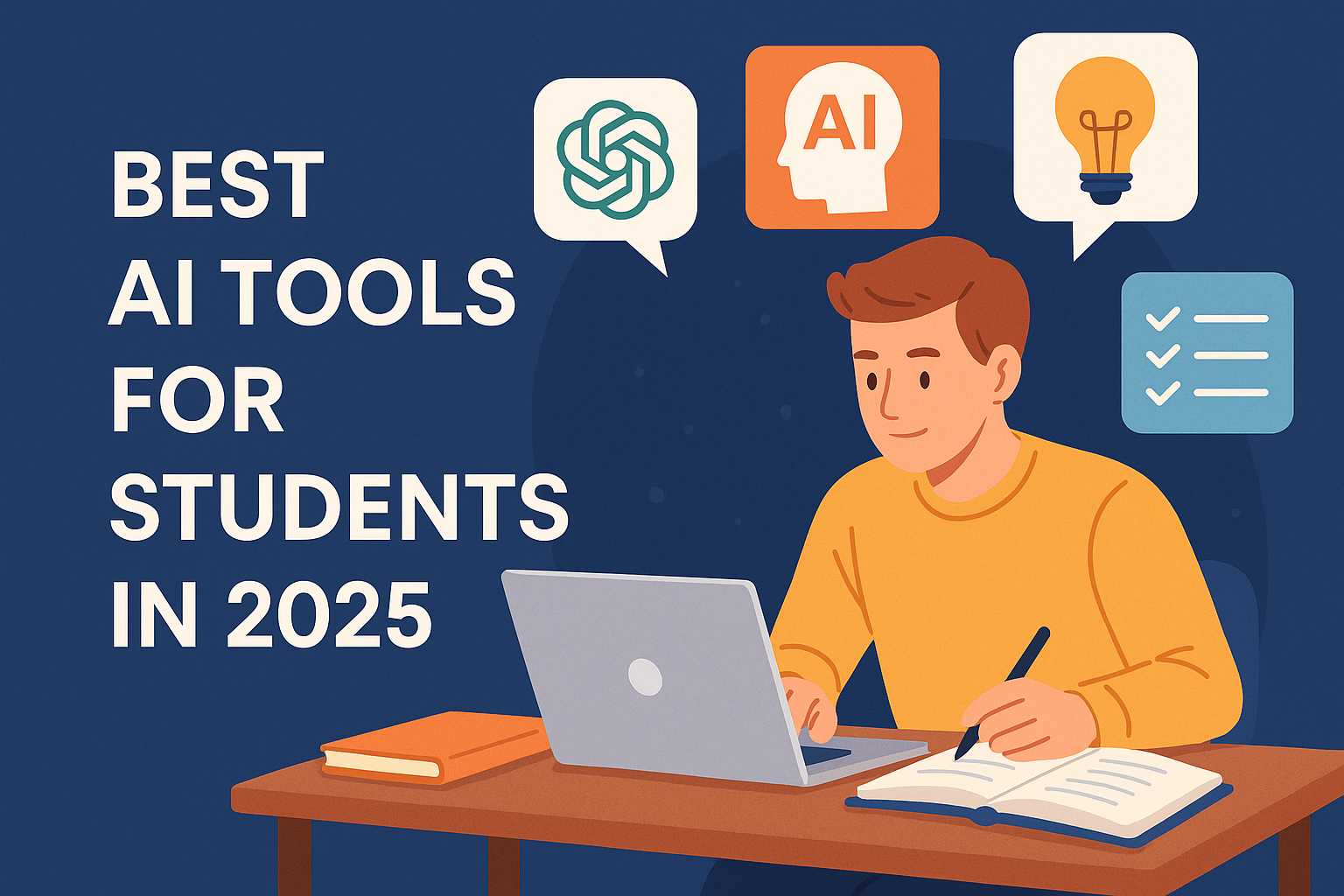
Best AI Tools for Students in 2025: Learn Smarter, Not Harder
Introduction
Artificial Intelligence (AI) has quickly become an indispensable tool in education. As we step into 2025, students around the world are leveraging AI-powered platforms to simplify learning, organize research, and automate repetitive academic tasks. From smart note-taking assistants to personalized tutoring systems, AI tools are reshaping how students study, manage time, and retain information. This article explores the best AI tools for students in 2025 that enhance creativity, productivity, and academic performance.
What Are AI Tools for Students?
AI tools for students are applications or software that use artificial intelligence to assist in academic tasks such as writing, studying, note-taking, project management, and exam preparation. These tools analyze data, learn from user behavior, and offer intelligent recommendations to make learning more efficient.
Some tools use natural language processing (NLP) to summarize notes or generate essays, while others rely on machine learning to create personalized study plans. Whether you’re in school, college, or pursuing professional certifications, the right AI tools can make a significant difference in your productivity and understanding of complex subjects.
Why AI Tools Matter for Students in 2025
The education landscape in 2025 is more digital and data-driven than ever before. Online learning platforms, remote collaboration, and self-paced courses have become the norm. AI plays a critical role in adapting education to these modern needs by offering real-time feedback, adaptive learning paths, and interactive experiences.
- Personalized learning: AI systems understand each student’s strengths and weaknesses to create customized learning paths.
- Time-saving automation: Students can delegate repetitive tasks like formatting citations or summarizing articles to AI tools.
- Accessibility: AI helps students with disabilities learn more effectively through voice commands, transcription, and adaptive interfaces.
- Data-driven insights: AI can analyze learning progress and suggest improvement areas, making study sessions more efficient.
In short, AI tools aren’t replacing students—they’re empowering them to learn smarter, not harder.
Top AI Tools for Students in 2025
Here’s a list of the best AI-powered applications that students should consider using in 2025. Each tool offers unique features to improve learning efficiency, creativity, and productivity.
1. ChatGPT (by OpenAI)
ChatGPT continues to dominate as one of the most versatile AI tools for students. From essay drafting and brainstorming project ideas to explaining difficult topics in simple language, ChatGPT acts as a 24/7 study companion.
- Generate outlines for assignments or essays.
- Get instant explanations for complex concepts.
- Practice for interviews or presentations using prompts.
Read: How Developers Can Use AI to Automate Daily Tasks in 2025
2. GrammarlyGO
GrammarlyGO is an advanced AI writing assistant that not only checks grammar but also suggests tone adjustments, clarity improvements, and creative rewrites. It’s perfect for essay writing, research papers, and scholarship applications.
- AI-powered tone suggestions for academic writing.
- Plagiarism detection to maintain originality.
- Context-aware grammar corrections.
3. Notion AI
Notion AI integrates seamlessly into the Notion workspace, turning note-taking into an intelligent process. It helps students summarize notes, generate task lists, and even brainstorm project ideas.
- Convert long lecture notes into concise summaries.
- Create automated to-do lists for study sessions.
- Collaborate on group projects with shared AI pages.
4. Quizlet AI
Quizlet uses AI to generate smart flashcards and quizzes. Its “Memory Score” and adaptive testing features track progress and help students focus on weak areas.
- Custom quizzes based on your study material.
- Gamified learning experiences.
- AI-generated explanations for wrong answers.
5. Perplexity AI
Perplexity AI is a research-focused AI search engine designed for students. It summarizes complex topics and provides accurate, citation-based responses—ideal for writing research papers.
- AI-powered research summaries.
- Source-backed answers for credibility.
- Ideal for college students and researchers.
6. Otter.ai
Otter.ai is one of the best AI transcription tools for students who attend lectures or online classes. It automatically records and transcribes conversations, making note-taking effortless.
- Real-time voice-to-text transcription.
- Searchable transcripts for easy review.
- Collaborative note sharing with classmates.
7. Mendeley
Mendeley is an AI-powered reference manager that simplifies the process of managing research papers and citations. It’s a must-have for students writing dissertations or theses.
- Automatically organizes and cites academic references.
- Integrates with Microsoft Word and Google Docs.
- Recommends related research articles using AI.
Pros and Cons of AI Tools for Students
Advantages
- Increased productivity: Automates repetitive academic tasks.
- Better learning outcomes: Provides tailored feedback and study recommendations.
- Creativity enhancement: Assists with idea generation and project planning.
- Accessibility: Helps students with diverse learning needs.
Disadvantages
- Over-dependence: Students may rely too heavily on AI tools.
- Data privacy concerns: Some tools require access to personal or academic information.
- Accuracy issues: AI-generated content can sometimes include factual errors.
Practical Use Cases of AI in Student Life
- Essay writing: Tools like ChatGPT and GrammarlyGO help structure essays and improve grammar.
- Note summarization: Notion AI or Otter.ai can convert lecture transcripts into summaries.
- Research management: Mendeley and Perplexity AI assist in organizing references and research material.
- Exam preparation: Quizlet AI generates practice tests tailored to your learning level.
- Collaboration: AI-powered task boards like Notion improve teamwork efficiency.
Step-by-Step Guide: How to Use AI Tools Effectively as a Student
- Identify your learning goals. Are you focusing on writing, research, or productivity?
- Choose 2–3 tools. Avoid using too many apps at once; focus on mastering a few.
- Set up a daily workflow. Use AI to plan tasks, summarize readings, and manage notes.
- Review AI output critically. Always verify facts and citations before submitting work.
- Stay ethical. Use AI for assistance, not for academic dishonesty or plagiarism.
Best Practices for Using AI in Education
- Combine human effort with AI help. AI should supplement—not replace—critical thinking.
- Fact-check outputs. Always validate AI-generated answers with credible sources.
- Keep your data safe. Use platforms with secure data policies.
- Stay updated. AI tools evolve quickly; keep exploring new features and updates.
Read: Emerging AI Technologies to Watch in 2025
Conclusion
AI tools for students in 2025 are redefining the boundaries of learning. They make education more accessible, personalized, and efficient. From intelligent writing assistants like GrammarlyGO to research helpers like Perplexity AI, these tools help students focus on understanding concepts instead of wasting time on repetitive tasks. However, success lies in using these tools responsibly — as aids, not crutches.
As AI continues to evolve, its role in education will only expand. The students who learn to leverage these technologies wisely will not only improve their academic performance but also gain future-ready skills essential in the digital world.
FAQs
1. What are the best free AI tools for students in 2025?
Some of the best free AI tools for students in 2025 include ChatGPT (free tier), Grammarly, Notion AI (limited free plan), and Quizlet AI. These tools cover writing, note-taking, and study automation without costing a dime.
2. Can AI tools replace human teachers?
No. AI tools are designed to assist, not replace, teachers. They enhance learning by providing instant feedback, extra practice, and personalized study recommendations, while teachers offer human guidance, emotional support, and mentorship.
3. Are AI tools safe to use for academic writing?
Yes, AI tools are safe if used ethically. Always double-check AI-generated content for accuracy and originality. Avoid submitting AI-written essays directly—use them as a foundation to refine your ideas and structure.
4. How can students use AI for exam preparation?
Students can use AI tools like Quizlet or ChatGPT to create practice questions, summarize notes, and test their understanding. These tools provide adaptive learning techniques that make exam preparation more interactive and effective.
5. What’s the future of AI in education?
AI in education will become even more personalized by 2030. Expect to see AI-driven tutors that adapt to real-time learning progress, emotional state analysis for engagement tracking, and global accessibility for all learning levels.