Free Online URL Encoder & Decoder – Encode & Decode Web Links Instantly
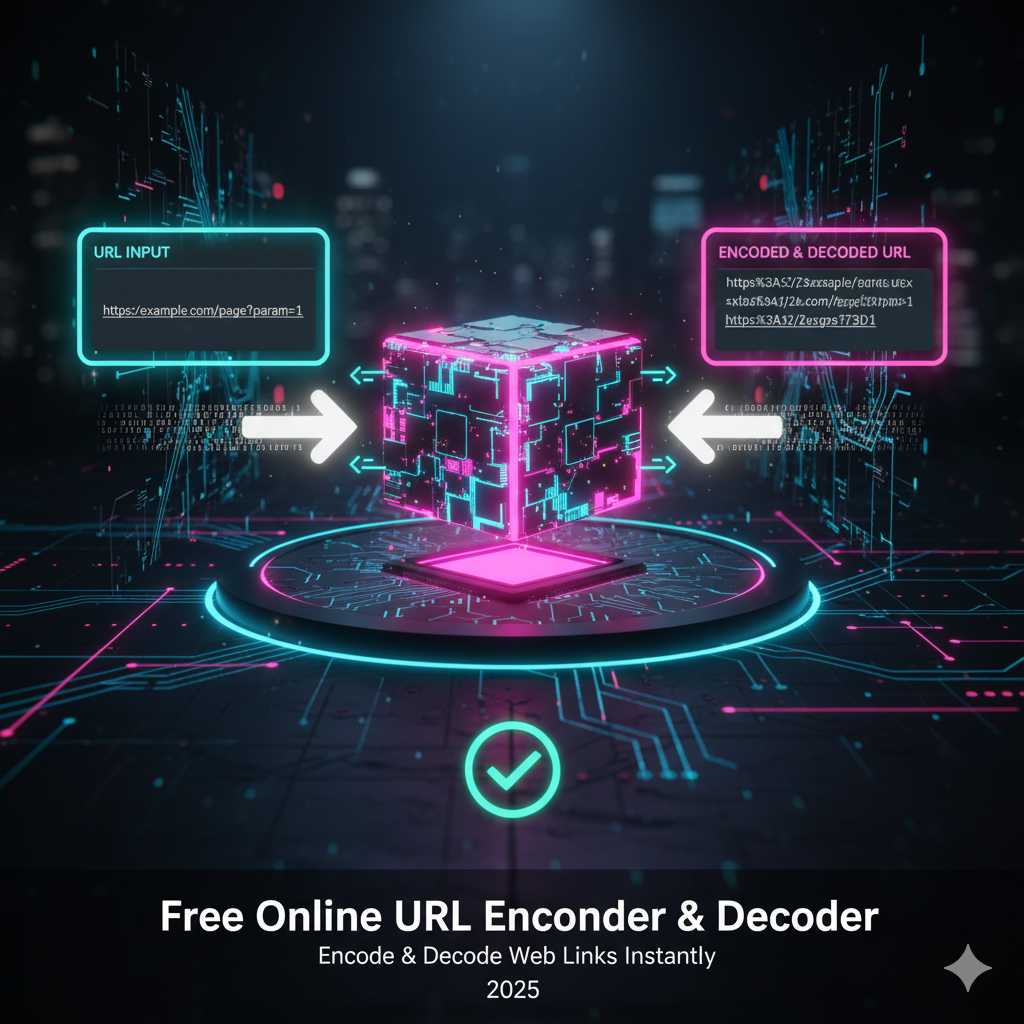
Free Online URL Encoder & Decoder – Encode & Decode Web Links Instantly
If you work with web links, APIs, marketing campaigns or any kind of URL sharing, you’ve likely encountered “percent-encoded” URLs or strings that look like “https%3A%2F%2Fexample.com%2Fpath”. Our URL Encoder & Decoder tool at KnowAdvance makes converting between human-readable and encoded URLs fast and easy.
What Is URL Encoding & Decoding and Why It Matters
URL encoding (also called percent-encoding) is the process of converting characters in a URL into a format that can be safely transmitted over the internet. Reserved or special characters such as spaces, punctuation or non-ASCII characters are replaced by one or more character triplets consisting of a percent sign “%” followed by two hexadecimal digits (for example: “ ” becomes “%20”). :contentReference[oaicite:1]{index=1}
Decoding is the reverse operation—turning percent-encoded strings back into readable form (“%20” → space, “%2F” → “/”). :contentReference[oaicite:2]{index=2}
Why this matters:
- Correct link formatting: URLs must be properly encoded so that browsers and servers can interpret them correctly.
- Avoid broken links: Special characters in URLs without encoding may cause errors or mis-routing.
- SEO & sharing: Clean, encoded URLs are easier to share safely and reliably across browsers and platforms. :contentReference[oaicite:3]{index=3}
- APIs & query strings: When passing data via URL parameters, encoding ensures special characters don’t break the parameter structure.
Key Features of Our URL Encoder & Decoder Tool
- Instant encode/decode: Paste your URL or string, click the button, and you get the result in seconds.
- Supports full URL strings: Works with entire URLs, query parameters, or any string requiring encoding/decoding.
- No signup or cost: Free to use right away, no account required.
- Safe & browser-friendly: The tool handles input securely and shows the encoded or decoded output clearly.
- Copy/share result easily: After conversion you can copy the result and use it in your project, campaign, or documentation.
How to Use the URL Encoder & Decoder Tool – Step by Step
- Navigate to the URL Encoder & Decoder page on KnowAdvance.
- Paste your URL or text string into the input box.
- Select whether you want to **Encode** or **Decode**.
- Click the corresponding button (e.g., “Encode URL” or “Decode URL”).
- The result appears instantly. Copy or download it as needed.
- Use the output in your application, marketing campaign, API, or wherever needed.
Real-World Use Cases for URL Encoding & Decoding
Here are some scenarios where this tool is especially useful:
- Marketing campaigns & tracking links: Assign UTM parameters or special characters in links that must be encoded to avoid breaks when shared via email or social media.
- Web development & APIs: When passing query strings or data in URLs, encoding ensures special characters don’t corrupt the request.
- Debugging links: If you receive a long encoded URL and want to understand its structure, decoding reveals readable parameters.
- Legacy systems & URL migration: Older systems or scripts may produce URLs needing cleaning or encoding before reuse.
- Social media and QR codes: Encode links to ensure they render properly when converted into QR codes or posted in chats where special characters may cause issues.
Troubleshooting: Why Your URL Might Still Fail
If your link still doesn’t work after encoding or decoding, check these:
- Ensure you select **Encode** vs **Decode** correctly—mixing them can lead to double-encoded or incorrectly decoded strings.
- Check if the original link contained unsupported characters or formatting issues (spaces, tabs, special Unicode characters) that might require manual adjustment.
- Large encoded URLs with many parameters may exceed browser or server length limits—consider shortening with a tool like URL Shortener.
- When sharing encoded URLs in email or social platforms, ensure the medium doesn’t auto-decode or alter the link parameters.
Tips & Best Practices for URL Encoding & Decoding
- Always test your final link: After encoding or decoding, open the link in a browser to ensure it resolves correctly.
- Use encoding responsibly: Encoded URLs can become unreadable to humans—if you can manage with a clean path, keep it simple.
- Shorten long URLs: If your URL becomes very long due to parameters, use a shortener to maintain usability and share-ability.
- Maintain readability: For marketing content, try to keep human-readable link structures where possible, and only encode what is essential.
Why Use Our URL Encoder & Decoder on KnowAdvance?
At KnowAdvance we build tools that are free, reliable and built for both developers and non-technical users. Here’s what makes our URL Encoder & Decoder stand out:
- Instant, browser-based tool with no signup required.
- Clean interface that focuses on the task — paste → encode/decode → copy.
- Part of a broader tool ecosystem — after encoding/decoding, you might also use our Meta Preview Tool, URL Shortener, or UTM Link Builder for a full link-management workflow.
- Optimized for performance and mobile friendly — you can encode/decode on the go, anywhere.
Related Tools You Might Find Useful
- URL Shortener — shorten long links after encoding for ease of sharing.
- UTM Link Builder — add tracking parameters to URLs, then use this tool to encode them before sharing.
- Meta Preview Tool — see how your link will preview on social media after encoding/shortening.
Final Thoughts
Whether you’re a developer handling API requests, a marketer preparing campaign links, or just someone who needs to ensure a URL works flawlessly when shared across platforms, properly encoding and decoding URLs is a foundational skill. With the free online URL Encoder & Decoder tool at KnowAdvance, you’ve got a simple, reliable solution at your fingertips.
Try it now → URL Encoder & Decoder