How Small CSS Cleanups Improve Long-Term Project Stability
Anyone who has worked on a long-running frontend codebase knows that the stylesheet often becomes a quiet source of trouble. Bugs that appear out of nowhere, components that behave differently across pages, and styles that override each other without warning—these usually don’t come from big mistakes, but from small bits of CSS that were never cleaned up. Over time, those tiny issues stack up. The good news is that small cleanups, done consistently, can stabilize a project more than most teams expect.
Why small CSS issues grow into big problems
A stylesheet rarely breaks all at once. It drifts. A duplicated rule here, an overly specific selector there, and suddenly adding one new component triggers unexpected layout changes across unrelated pages. These issues aren’t dramatic when they’re introduced, which is why they often slip through reviews. What makes them harmful is how they accumulate.
When several developers contribute over months or years, it’s natural for patterns to diverge. Even frameworks and design systems can’t prevent that drift entirely. A few unused classes may not feel important today, but they influence how future contributors read and extend the code. Each extra rule slows down understanding and increases the chance of accidental overrides.
The subtle stability gained from tidier stylesheets
A small cleanup—removing dead code, simplifying a selector, or merging two nearly identical rules—doesn’t feel like a breakthrough. But these changes reshape the environment in which every future style is written. A clearer file makes it easier to see where new rules belong, which encourages consistency. A lighter stylesheet reduces cognitive load. Developers start spending less time hunting for the right place to add styles, and more time building features.
One of the biggest benefits of small cleanups is predictability. When the CSS behaves the way you expect, debugging becomes faster. Layout and spacing decisions become repeatable. Even onboarding a new teammate becomes smoother because the codebase reads more like a story and less like a jigsaw puzzle.
Examples of tiny CSS improvements that pay off over time
Not every cleanup needs a Jira ticket or a sprint slot. Some can happen organically during regular work—similar to straightening your desk instead of waiting for a deep clean. Here are a few subtle fixes that often make a noticeable difference:
1. Merge duplicate selectors. If you find two blocks styling the same element with minor differences, combine them thoughtfully. Future overrides become clearer.
2. Reduce unnecessary specificity. Selectors like .sidebar .menu ul li a often cause fragile behavior. Simplifying them makes the stylesheet more flexible.
3. Remove outdated utility classes. Teams often evolve naming conventions. Leaving old ones behind forces everyone to mentally track multiple systems.
4. Trim dead CSS. Old features, removed components, and legacy experiments leave behind fragments that can safely disappear.
Individually, these actions don’t seem transformative. But across a year of development, they gradually shift the project from “hard to work with” to “pleasantly predictable.”
How thoughtful formatting influences project health
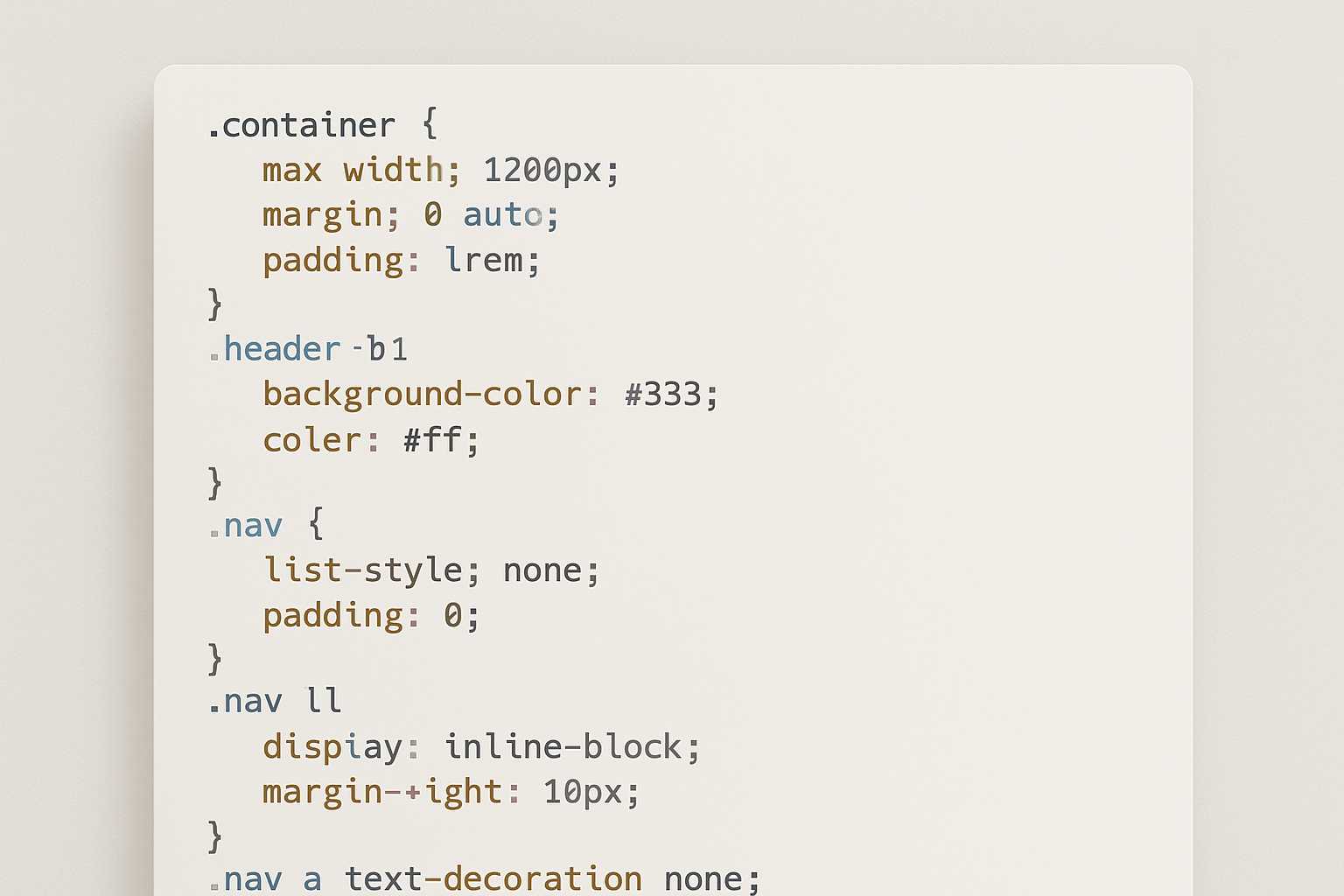
Another surprisingly impactful cleanup is simply formatting the stylesheet with intention. Consistent spacing, indentation, and grouping improve scan-ability, which directly affects how quickly developers understand context.
When refactoring or reorganizing files, some developers use tools to quickly reformat or compress code. I sometimes run snippets through a minifier such as this small utility when testing how rules combine, especially before reorganizing larger chunks of CSS.
The role of naming in long-term stability
Naming tends to be underestimated in CSS discussions. But poor naming slows teams down more than any number of fancy techniques. A name is a promise. If a class says .button-primary, you expect specific behavior. If someone adds .button-main three months later because they didn’t notice the first one, you’ve planted a seed for future confusion.
Good names don’t need to be perfect—just predictable. They help developers understand how to extend the system without creating a new pattern for every new need. When names connect clearly to purpose, stylesheets stay coherent even as they grow.
Why incremental cleanups are more effective than large rewrites
Large CSS rewrites often sound appealing. “Let’s start fresh and do it right this time.” But rewrites take time, introduce new bugs, and rarely survive the pace of real product development. Projects evolve, teams change, deadlines shift. A big rewrite that isn’t finished quickly risks becoming another layer of technical debt.
Incremental cleanups, on the other hand, fit naturally into ongoing work. A quick fix during a feature update. A little restructuring after reviewing a merge request. A 30-second removal of an unused declaration after noticing it during a bug hunt.
These small actions blend into the project’s rhythm. They don’t interrupt delivery, yet they continually strengthen the foundation. Over months, the impact becomes unmistakable.
How CSS cleanup influences other parts of the frontend
A tidy stylesheet affects much more than styles. It supports accessibility by reducing contradictory or unintended styles that break focus outlines or spacing around form elements. It improves performance by cutting unnecessary bytes. It even helps designers by making component behaviors easier to predict.
Teams that keep their CSS clean often find themselves making more thoughtful decisions elsewhere. Code reviews become smoother because contributors don’t need to work around old quirks. UI consistency improves simply because the path to adding new styles is easier to understand.
I’ve seen teams unlock surprising clarity in their React or Vue components just by cleaning up a handful of styles that had been silently causing workarounds. When the base styles behave reliably, components become simpler and the UI structure becomes clearer.
Where internal references help reinforce good habits
Maintaining CSS is not just about cleaning up—it’s also about aligning with practices that keep code predictable. On KnowAdvance, a few guides touch on related ideas. For example, the discussion on improving frontend readability pairs well with how CSS organization affects comprehension. And the walkthrough on fine-tuning gradients often reminds developers how small adjustments can meaningfully change UI polish.
Internal references like these help teams form shared mental models, which indirectly supports cleaner CSS over time.
A mindset that treats CSS as a living part of the system
Long-term project stability doesn’t come from perfection; it comes from steady care. CSS isn’t something you write once and consider complete. It changes, it adapts, and it reflects the habits of the team maintaining it.
When developers treat small cleanups as part of everyday work—just like naming variables well or removing unused imports—the whole codebase benefits. The stylesheet becomes predictable instead of fragile, clear instead of cluttered.
Those tiny improvements add up. They create a frontend environment where new features feel easier to add, bugs feel less mysterious, and the project as a whole feels steadier year after year.