How Small Utility Tools Quietly Improve Daily Digital Workflows
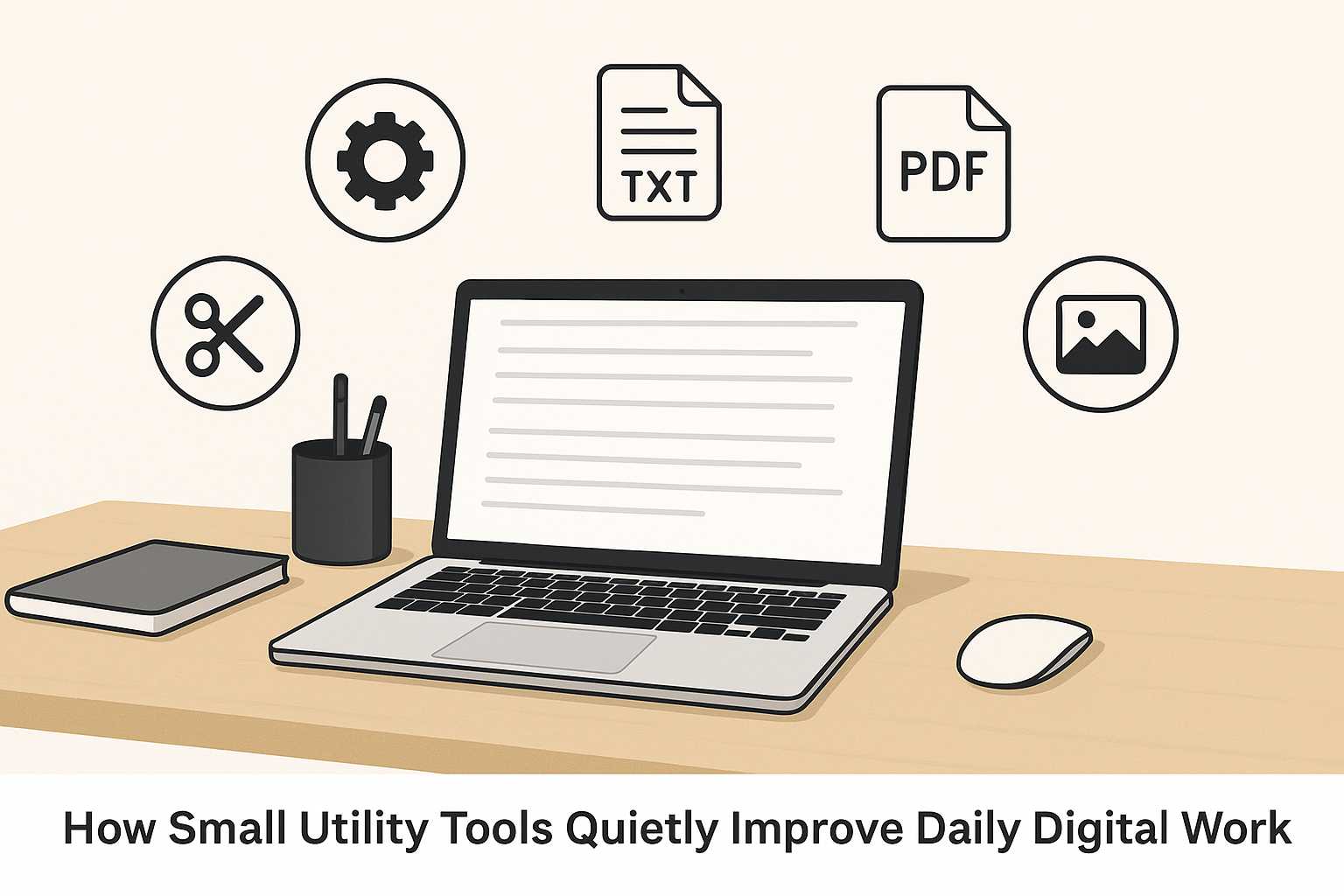
Most people think productivity improves only through big systems or major software upgrades. Yet a surprising amount of friction comes from tiny, repetitive tasks—the kind you barely notice until something finally makes them easier. Small utility tools often slip into this space quietly. They don’t promise to change your life, but they often change your daily rhythm in ways you feel immediately.
These tools rarely get the spotlight because they’re not glamorous. They don’t require long onboarding sessions or complex settings. Instead, they sit in your browser or bookmarks bar and quietly remove micro-frictions that accumulate throughout the day. When those frictions disappear, the mental space they free up becomes noticeable.
A closer look at where micro-friction hides
Most digital workflows have small recurring tasks: converting a file, extracting text, formatting something quickly, or stitching pieces of information together. None of these tasks are hard, but they interrupt your flow. If you’re working on a long document and suddenly need to convert a text snippet into a PDF, that interruption breaks your concentration more than the task itself.
That’s why lightweight tools often feel like magic. They remove the need to open heavy software or hunt through menus. Even something as simple as a text-to-PDF tool can keep momentum intact. While writing this article, I used this online converter in the middle of drafting to quickly generate a neatly formatted document, and the ease of that moment is exactly what makes these tools valuable.
Small tools often solve narrow problems beautifully
There’s a tendency to look for all-in-one solutions. But narrow tools often outperform bigger alternatives for single tasks. They load faster, remove unnecessary choices, and give a sense of “one-and-done” clarity.
For example, many writers use distraction-free text editors not because their main editors are bad, but because switching modes resets the mind. Visual designers sometimes rely on tiny color-picker utilities even when their main software includes one. It’s the immediacy that matters.
I’ve seen developers do something similar. Even though IDEs offer every feature imaginable, many still keep a tiny JSON formatter bookmarked. It’s not about capability—it’s about confidence that a tool will do exactly one thing without hesitation or complexity.
How these tools subtly shape better habits
One overlooked benefit of small utility tools is how they influence our workflow habits over time. When a task becomes easier, we start doing it more consistently. That consistency builds order into work naturally, without forcing any strict productivity systems.
For instance, keeping documents tidy becomes second nature when conversion or cleanup takes seconds. I’ve noticed that teams tend to share cleaner files when quick formatting tools are available. Someone working with large text data might use a lightweight cleanup tool before sending a message, not because they’re told to, but because it’s so simple to do.
There’s a similar effect in creative work. A small thumbnail generator or image resizer can normalize good practices. Instead of resizing images at the end of a project, people do it as they go, reducing final-hour chaos.
The quiet role of these utilities in collaborative workflows
Collaboration benefits from clarity, structure, and predictable formatting. Teams often underestimate how much time they lose due to minor inconsistencies—misaligned files, incompatible formats, oversized attachments.
Small utilities smooth out these bumps. A quick compression tool prevents someone from sending a 30MB attachment without realizing it. A shareable paste-bin link keeps long code snippets readable. Even a simple online converter reduces version conflicts when not everyone uses the same software suite.
I’ve worked with teams where the introduction of only two or three tiny tools significantly cleaned up shared folders. People no longer had to ping each other asking for a “proper” file version. Everything just flowed better.
If you're exploring similar improvements, the blog on why simple tools matter offers a nice complementary perspective, and many find value in checking a lightweight converter from the collection of everyday work utilities when refining their workflow setup.
Why these tools matter more as work gets faster
Digital communication has been speeding up for years. We may not notice the change week-to-week, but the cumulative effect is there. People switch tasks dozens of times a day, often reacting to messages or requests that arrive unexpectedly.
A small tool becomes a stabilizing element in such an environment. When you know exactly where to go for a quick conversion or formatting task, it reduces the mental load that constant switching creates. You stop improvising workarounds and start relying on tiny, consistent anchors.
This reliability helps restore a sense of flow. Even if a task is brief, removing uncertainty around it makes the day feel smoother.
The subtle personality of tiny tools
The charm of these utilities often lies in their simplicity. Many are built by independent developers solving their own problems. This gives them a distinct personality: they feel handcrafted rather than industrial.
You might notice thoughtful touches—clean interfaces, minimal buttons, lightweight animations. They give a sense that someone cared enough to remove clutter. In a way, these tools reflect the ideal of digital craftsmanship: purposeful, focused, efficient.
When you rely on such tools, you’re not just speeding up tasks; you’re choosing to work in an environment with less cognitive noise. That alone can make a workday feel lighter.
Letting utility tools become part of your natural rhythm
Most people don’t adopt small tools through deliberate planning. They stumble upon them, try them once, and gradually fold them into their workflow. The key is noticing the moments when a tiny improvement eliminates a recurring frustration.
If a tool feels delightful on first use, bookmark it. Keep it somewhere you can access in two clicks. Over time, these quick helpers form an invisible network around your workday, catching the little tasks before they sap your attention.
A good workflow isn’t built through rigid systems. It emerges through repeated, easy behaviors. Small utility tools subtly support those behaviors and make them more sustainable.
A quiet conclusion
Digital tools don’t need to be massive or complex to make a genuine difference. Often, it's the lightweight, narrowly focused utilities that leave the deepest imprint on daily work. They free mental space, smooth out awkward moments, and make routine tasks feel less like chores. When your workflow feels quietly supported, you notice the difference not in dramatic productivity spikes, but in calmer, steadier progress throughout the day.