Improving API Onboarding with Clearer Response Structure
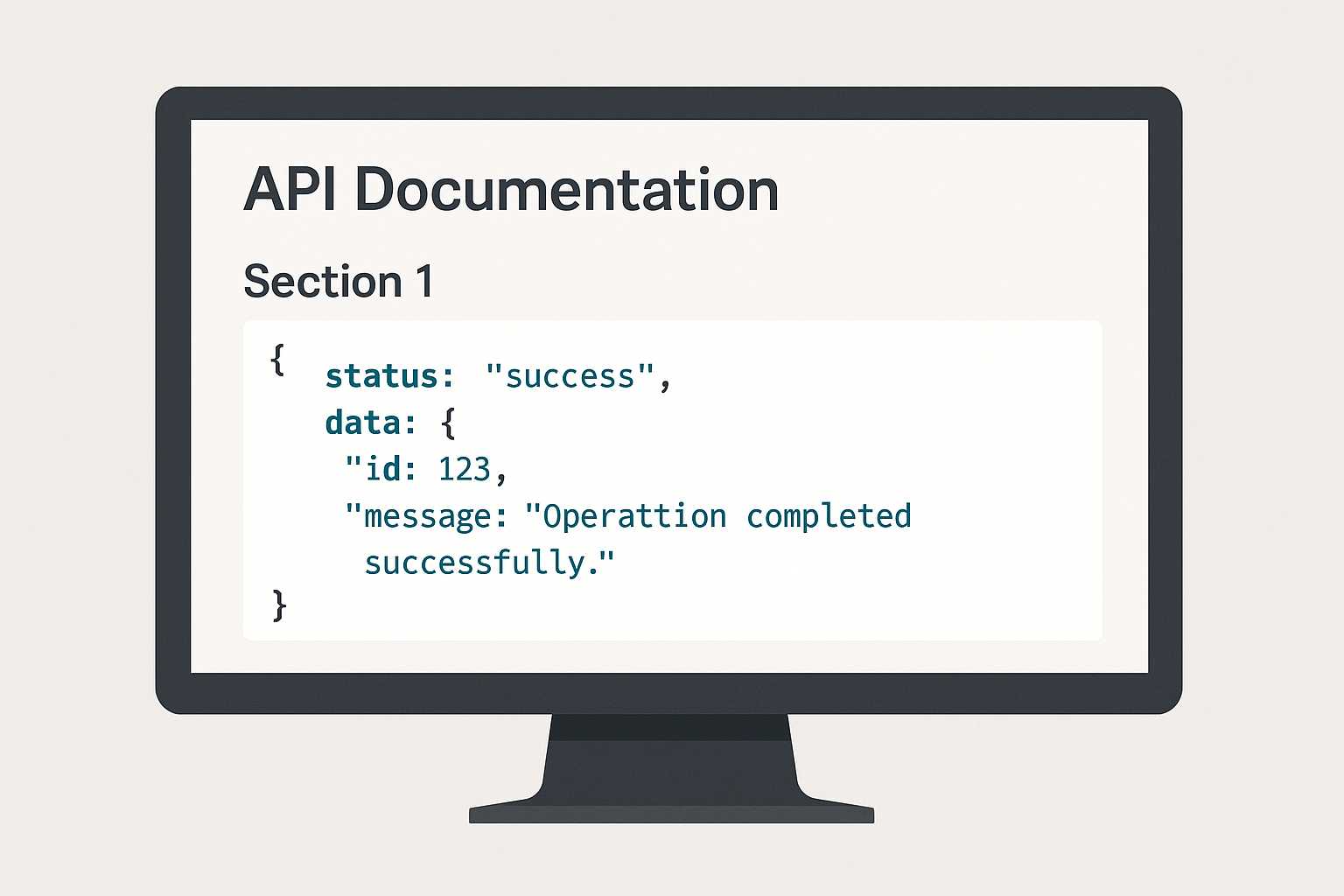
When developers try a new API for the first time, they are not thinking about architecture, internal design decisions, or how much effort went into the backend. They just want the response structure to make sense. A clear, predictable response often makes the difference between smooth onboarding and hours of unnecessary friction.
APIs succeed when developers can understand them quickly. That understanding usually begins with the response format. Clean structure helps developers reason about data, reduces trial and error, and builds trust. Poorly structured responses, on the other hand, introduce doubt—developers wonder whether the issue is their implementation or the API itself.
Improving onboarding isn’t about adding more features. It’s often about reshaping how responses are presented. Clarity creates confidence, and confidence encourages adoption.
Why Response Structure Matters More Than Most Teams Assume
When developers talk about API usability, they often mention documentation, authentication, and SDK availability. While those matter, the response structure shapes the experience at a deeper level.
A clear response gives developers a mental map of the API in seconds. A messy response makes them stop and interpret details one field at a time. The difference compounds quickly.
Think about the first time you opened an unfamiliar endpoint. If the structure felt intuitive, you probably moved forward without hesitation. If it felt inconsistent or confusing, you likely slowed down, double-checked assumptions, or looked for examples elsewhere. This hesitation is exactly what onboarding should avoid.
The Most Common Issues That Slow Down API Onboarding
API teams often underestimate how small inconsistencies affect usability. Developers integrating an API don’t want to guess. Anything that forces them to pause, re-evaluate, or inspect the raw response more closely becomes a friction point. Some of the most frequent issues include:
- Inconsistent field names across endpoints
- Nested structures that are deeper than necessary
- Different shapes for the same type of data
- Lack of predictable wrappers for errors or statuses
- Missing or unclear metadata for pagination or limits
Each of these requires developers to stop and think. The goal of onboarding is to reduce these stops as much as possible.
Consistency: The Backbone of a Good Response Structure
The fastest way to build clarity is consistency across endpoints. It doesn’t matter which naming convention a team chooses—camelCase, snake_case, lowercase—so long as the entire API follows the same pattern.
Consistency extends beyond naming. It includes:
- Predictable error formats
- Stable data wrappers
- Uniform pagination responses
- Repeated fields behaving identically across endpoints
When developers see a familiar pattern, they understand the response immediately. That removes cognitive load and builds confidence in the API.
Shallow, Understandable Nesting Makes Responses Easier to Read
Deep nesting is one of the most common issues in real-world responses. Teams often structure data according to internal database schemas instead of the needs of external developers. Excessive nesting forces developers to navigate multiple levels before reaching meaningful fields.
For example, this:
{
  "user": {
    "details": {
      "profile": {
        "name": "Sarah"
      }
    }
  }
}
Could simply be this:
{
  "name": "Sarah"
}
Shallow structures help developers scan responses visually. That single improvement can dramatically lighten onboarding friction.
Clear Separation of Data, Errors, and Metadata
A frequent source of confusion is when APIs mix information in ways that aren’t obvious. Developers need to quickly identify:
- The actual data
- Any errors returned
- Supporting metadata for the request
Combining these in a single flat structure forces developers to interpret meanings instead of reading them intuitively. A simple pattern like this helps:
{
  "data": { ... },
  "error": null,
  "meta": { ... }
}
Even if a team chooses a different layout, the important part is that the separation stays consistent throughout the API. Predictability is more valuable than creative formatting.
Error Responses Should Be Just as Structured as Successful Ones
Developers often spend more onboarding time debugging than building. When error responses are inconsistent, unclear, or missing context, the debugging phase becomes slow and frustrating.
Improving error structures means providing:
- A clear error code
- A human-readable message
- Optional fields for context
- Optional suggestions for corrections
A helpful error response saves developers from trial and error. It also builds trust that the API won’t surprise them with cryptic or incomplete messages later.
Providing Examples That Match Real Responses
Examples are often the first thing developers look for in documentation. But examples only help when they match exactly what the API returns. Any deviation—different field names, missing wrappers, inconsistent structures—creates doubt.
Good examples show:
- Success responses
- Error responses
- Paginated data
- Optional fields in both states
Developers should be able to copy an example, paste it into a test environment, and see identical behavior. Anything else slows onboarding dramatically.
Improving Visual Clarity Using Clean Formatting
Readable JSON is easier to understand, regardless of complexity. Clean indentation reveals structure instantly, allowing developers to find fields in seconds instead of guessing where nesting begins and ends.
Clear formatting also highlights problems. While reviewing API examples recently, I used {{link_of_tool}} to tidy up a block of data, and the structure immediately exposed a misplaced object that wasn’t obvious in the original compressed line.
Formatting isn’t just cosmetic—it turns hidden structure into visible information.
Reducing Ambiguity with Explicit Fields
Ambiguity in API responses is a quiet source of onboarding frustration. Developers constantly make assumptions unless the structure communicates clearly.
Fields should make meanings obvious. For example:
countis vague—does it refer to total records or items in the current page?statuscould mean request status, user status, or payment status.infotells the developer nothing without context.
Replacing vague names with specific ones reduces guesswork, which is the main source of onboarding hesitation.
Designing Pagination So It’s Instantly Understandable
Pagination is often implemented in ways that feel logical to the backend but confusing to external developers. A consistent format helps developers integrate quickly.
A commonly appreciated layout looks like this:
{
  "data": [...],
  "meta": {
    "page": 1,
    "per_page": 20,
    "total_pages": 10,
    "total_items": 200
  }
}
No ambiguity. No guessing. Just clear information.
When onboarding developers don’t have to decipher these details, they reach productive work much faster.
Providing Optional Fields Thoughtfully
Optional fields are inevitable. But inconsistent handling of optional fields slows developers down more than most teams realize.
Some APIs return:
- A missing field entirely
- The field with
null - An empty array or empty object
Each approach is fine as long as it is consistent. Developers shouldn’t have to write code that checks for three different shapes of the same field.
Clear onboarding explains the behavior up front, and clear response structures enforce it.
Making Room for Extensibility Without Confusing Users
APIs evolve. New fields get added. Structures expand. But if responses aren’t designed with extensibility in mind, new fields disrupt onboarding for new developers and existing integrators.
Extensible design might include:
- Stable top-level wrappers
- Predictable places for metadata
- Optional fields that don’t break expectations
- A consistent naming pattern for new attributes
When new fields slot into predictable places, developers adapt easily.
Avoiding Surprises by Keeping Shapes Predictable
Predictability is a major factor in positive onboarding experiences. Developers shouldn’t have to test endpoints repeatedly to discover edge cases. Clear documentation combined with predictable response patterns eliminates surprises.
A field that sometimes returns a single object and sometimes an array is one of the most infamous onboarding blockers. Developers write defensive code instead of focusing on building real features.
Keeping data shapes stable removes this burden entirely.
The Role of Response Wrappers in Clarity
Some APIs prefer wrapping responses; others return raw data. Both approaches can work well as long as they remain consistent. Wrappers provide structure, making context easy to locate.
Common wrappers include:
datametaerror
The key is making sure developers know what lives where. A predictable wrapper layout improves reasonability and shortens the mental distance between endpoints.
Thoughtful Versioning Reduces Onboarding Confusion
Versioning is inevitable when APIs grow, but unclear versioning creates confusion during onboarding. Developers should never wonder whether a field changed because of an undocumented update.
Good versioning communicates:
- Which version introduced specific fields
- Which responses differ across versions
- Whether older versions behave the same way across endpoints
When response structures change in new versions, documentation should highlight differences clearly to avoid onboarding setbacks.
Developers Want Clarity, Not Complexity
At the end of the day, developers onboarding onto any API want the same core things: readability, consistency, predictability, and simple patterns. Every improvement in response structure supports these goals.
Teams don’t need elaborate redesigns to improve onboarding. They just need to remove ambiguity and lower the mental load required to understand each response.
Conclusion
API onboarding becomes far smoother when response structures are crafted with clarity in mind. Developers move quicker, make fewer assumptions, and rely less on trial and error. A well-organized structure isn’t about aesthetics—it directly influences how effectively someone can learn and use an API.
Clear responses invite developers to explore. Confusing ones push them away. Improving response structure is one of the easiest, most impactful ways to create a positive onboarding experience.