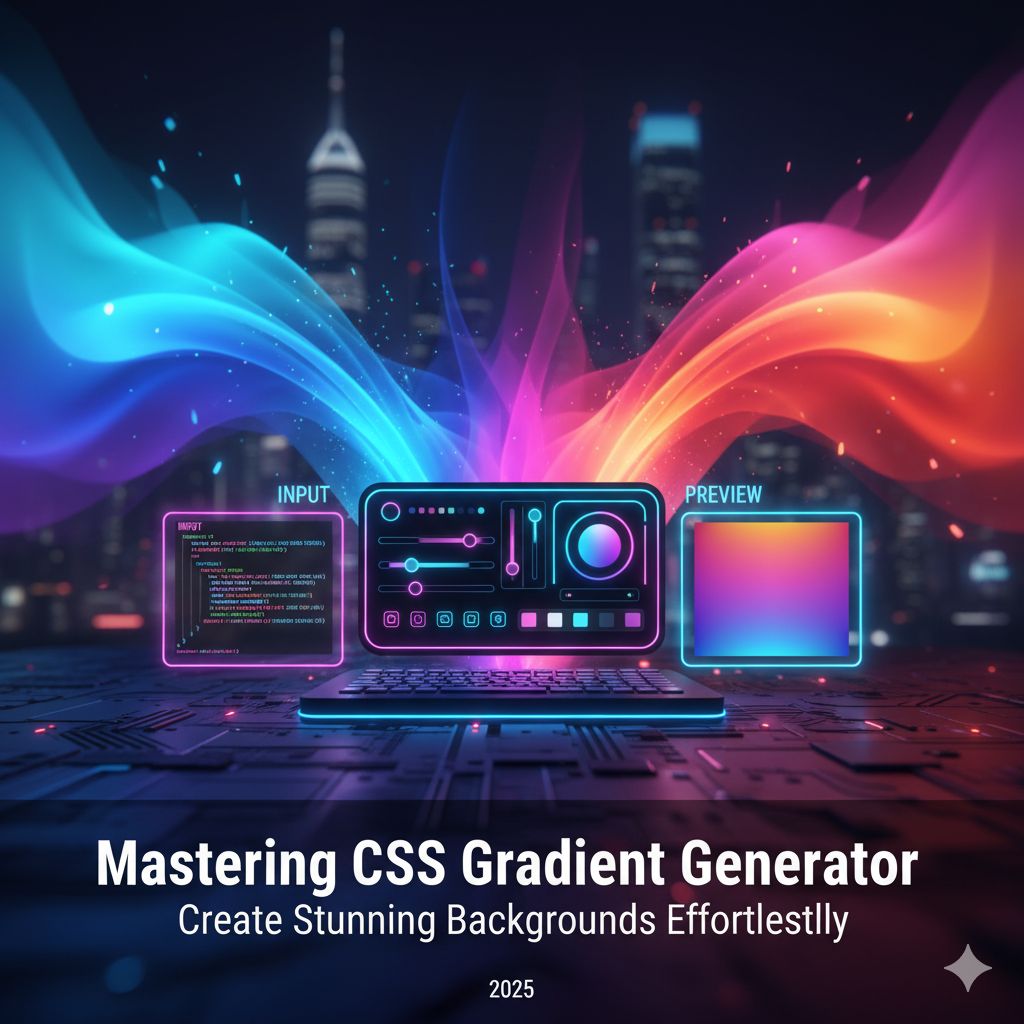
Mastering CSS Gradient Generator: Create Stunning Backgrounds Effortlessly
What is a CSS Gradient Generator?
A CSS Gradient Generator is an online tool that allows designers and developers to create visually appealing gradients using simple color combinations and direction settings. Gradients are transitions between two or more colors that blend smoothly, adding depth, elegance, and modernity to a web page. Instead of manually writing long CSS gradient code, these generators let you visually create and preview the gradient before copying the ready-to-use CSS code.
With the rise of minimal and aesthetic design trends, gradients have become a staple in modern web and app design. They’re used in backgrounds, buttons, cards, typography, and even logos to enhance user engagement. Tools like the KnowAdvance CSS Gradient Generator make it effortless to build beautiful gradients in seconds.
Why CSS Gradients Matter in Modern Web Design
Gradients are more than just a color effect. They communicate a brand’s tone, emotion, and hierarchy. A subtle gradient background can make a call-to-action button pop or create a luxurious visual depth that attracts attention. In 2025, the popularity of gradients continues to rise, especially with UI trends focusing on glassmorphism, neumorphism, and minimal gradient overlays.
Here’s why CSS gradients matter:
- Lightweight: Gradients are created using CSS, meaning no external image files are needed — faster page loads, better performance.
- Responsive Design: Gradients scale seamlessly across all screen sizes and resolutions.
- Customizable: You can control direction, color stops, opacity, and shape directly in CSS.
- Modern Look: Perfect for achieving modern, fluid interfaces that feel dynamic and fresh.
Types of CSS Gradients
CSS offers multiple gradient types, each serving unique purposes. Understanding the difference helps designers choose the right style for their project.
1. Linear Gradients
Linear gradients blend colors along a straight line (horizontal, vertical, or diagonal). It’s the most common type of gradient used in backgrounds and buttons.
background: linear-gradient(to right, #ff7e5f, #feb47b);
This example creates a smooth transition from orange to light peach from left to right.
2. Radial Gradients
Radial gradients spread colors outward from a central point, like a ripple effect.
background: radial-gradient(circle, #1e3c72, #2a5298);
They’re often used in logos, profile images, or circular buttons to give a glowing or spotlight effect.
3. Conic Gradients
Conic gradients rotate colors around a center point, forming pie-like color transitions.
background: conic-gradient(from 180deg, #ff9a9e, #fad0c4, #fbc2eb);
This type of gradient is new and trending for dashboards, charts, and visual infographics.
How to Use the CSS Gradient Generator
Using the KnowAdvance CSS Gradient Generator is extremely simple, even for beginners. Here’s how:
- Open the CSS Gradient Generator tool.
- Select the gradient type – linear, radial, or conic.
- Pick your desired colors using the color picker or input hex/rgb values.
- Adjust the gradient angle or position for the perfect effect.
- Preview the result in real-time.
- Copy the generated CSS code and paste it into your stylesheet.
That’s it! You can also experiment with multiple color stops, transparency, and direction angles for custom effects.
Popular Gradient Color Combinations
Choosing the right colors can make or break your design. Here are some trending 2025 gradient color combinations that work well across UI and web projects:
- Sunset Glow: #ff7e5f → #feb47b
- Ocean Blue: #00c6ff → #0072ff
- Rose Quartz: #fbc2eb → #a6c1ee
- Minty Fresh: #a8edea → #fed6e3
- Royal Purple: #8e2de2 → #4a00e0
- Cyber Neon: #00f5a0 → #00d9f5
Best Practices for Using Gradients
When using gradients, balance is key. Overusing gradients or picking clashing colors can make your design look unprofessional. Follow these best practices:
- Keep It Subtle: Avoid harsh transitions; soft gradients are visually more appealing.
- Use Brand Colors: Blend gradients with your existing brand palette.
- Consider Accessibility: Ensure text over gradient backgrounds has enough contrast.
- Combine with Other Effects: Gradients work beautifully with shadows, blur (glassmorphism), and outlines.
Gradients in Modern UI Trends (2025 Edition)
In 2025, the web design world has embraced gradients in creative ways. Let’s explore where gradients are trending the most:
1. Glassmorphism
This style uses semi-transparent layers with background blur, giving a glass-like effect. Gradients enhance the depth and realism of these elements.
2. Neumorphism
Gradients are used subtly to create soft shadows and light effects that simulate real objects. Perfect for modern app interfaces.
3. Dark Mode Gradients
Instead of bright transitions, designers use deep, moody gradients that glow slightly, perfect for dark-themed websites and dashboards.
4. Animated Gradients
Animated gradients, achieved through CSS animations, create moving color transitions that feel alive and interactive. These are trending on landing pages and portfolio sites.
@keyframes gradientAnimation {
  0% {background-position: 0% 50%;}
  50% {background-position: 100% 50%;}
  100% {background-position: 0% 50%;}
}
.gradient-bg {
  background: linear-gradient(-45deg, #ee7752, #e73c7e, #23a6d5, #23d5ab);
  background-size: 400% 400%;
  animation: gradientAnimation 15s ease infinite;
}
Benefits of Using an Online CSS Gradient Generator
Instead of guessing color codes or direction values, using an online gradient generator saves time and ensures precision. Here are the key advantages:
- Visual Creation: Instantly see how your gradient will look.
- Time Saving: No need to write or adjust long CSS manually.
- Experiment Freely: Mix, match, and adjust colors with no limits.
- Ready-to-Use Code: Copy the CSS instantly for any project.
- Cross-browser Compatibility: Modern generators provide prefixes for all browsers.
Using CSS Gradients in Real Projects
Let’s explore how developers can use gradients effectively in real-world applications:
1. Backgrounds
The most common use case. Gradients make backgrounds dynamic and attention-grabbing.
2. Buttons
Gradient buttons stand out more than flat ones, especially for calls-to-action.
3. Cards and Containers
Gradients can subtly enhance the visual hierarchy between different UI sections.
4. Text Effects
CSS gradients can be applied to text using background-clip for beautiful typography effects.
.gradient-text {
  background: linear-gradient(to right, #30cfd0, #330867);
  -webkit-background-clip: text;
  -webkit-text-fill-color: transparent;
}