Mastering iOS Development: Advanced Concepts, Performance, Monetization & Career Guide
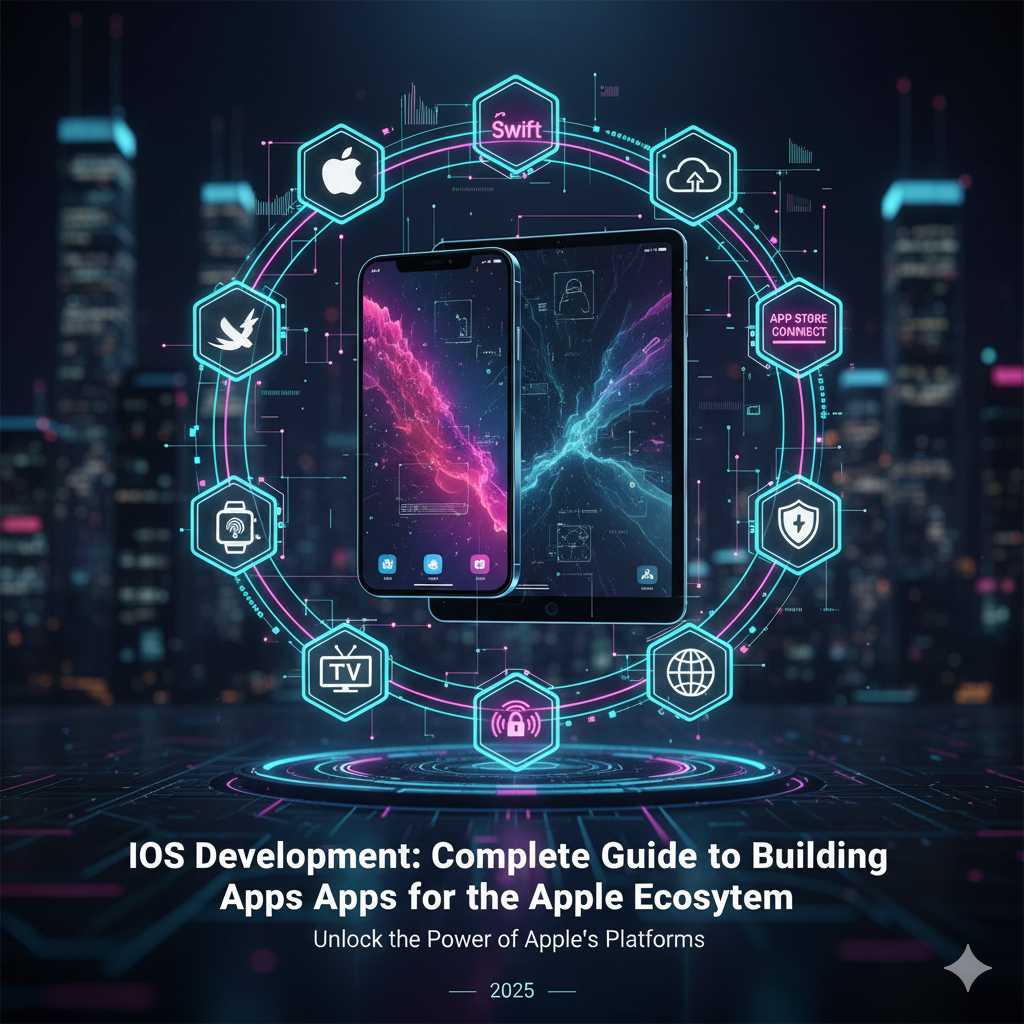
iOS Development: A Complete Guide to Building Apps for the Apple Ecosystem
iOS development is one of the most dynamic, in-demand, and rewarding fields in the software industry today. With millions of Apple users worldwide and a thriving App Store ecosystem, learning how to develop iOS apps can open countless opportunities — from building your own apps to working with top tech companies.
In this detailed guide, we’ll explore everything you need to know about iOS development — the tools, languages, architecture, frameworks, and the step-by-step process of building and publishing an iOS app. Whether you’re a complete beginner or an experienced developer, this article will give you the foundation you need to start or grow your iOS career.
What Is iOS Development?
iOS development refers to the process of designing, coding, testing, and deploying mobile applications for Apple devices such as the iPhone, iPad, and iPod Touch. Developers use Apple’s programming languages — Swift and Objective-C — and the official IDE called Xcode to build these applications.
iOS developers can build apps for various purposes:
- Consumer apps: social media, e-commerce, gaming, health, and utilities.
- Enterprise apps: business productivity tools, data dashboards, internal communication systems.
- Specialized domains: education, fitness, finance, IoT, and AR-based apps.
The Evolution of iOS Development
Apple introduced the first iPhone in 2007, but third-party app development didn’t begin until 2008 with the release of iOS 2 and the App Store. Since then, iOS has evolved dramatically, both in capability and developer experience.
| Year | Milestone |
|---|---|
| 2008 | Launch of the App Store; developers use Objective-C. |
| 2010 | iPad introduced; iOS supports multiple device types. |
| 2014 | Apple introduces Swift, a modern, safer programming language. |
| 2017 | ARKit allows creation of Augmented Reality apps. |
| 2019 | SwiftUI brings declarative UI programming to iOS. |
| 2020–Present | iOS apps run on macOS with Catalyst and Apple Silicon integration. |
Over the years, Apple has focused on simplifying the development process while introducing advanced technologies like CoreML for machine learning, ARKit for AR experiences, and CloudKit for data synchronization. This makes iOS development a blend of creativity, performance, and cutting-edge innovation.
Why Choose iOS Development?
iOS development continues to be one of the most attractive career paths in tech. Here are some compelling reasons why:
1. High Demand and Salary
Skilled iOS developers are in demand worldwide. According to Glassdoor, an iOS developer earns an average of $110,000+ per year in the U.S., while in India, salaries range from ₹8–25 LPA depending on experience and skill level.
2. Loyal and Engaged User Base
Apple users are known for their brand loyalty and are more likely to pay for quality apps. This provides developers and businesses a stable, premium market to target.
3. Secure and Stable Platform
Unlike Android’s fragmented ecosystem, iOS provides a controlled and highly secure environment. Developers can focus on optimizing app performance instead of device compatibility issues.
4. Global Exposure
Apps developed for iOS have access to a worldwide audience through the App Store. With the same app, developers can reach users in over 150 countries.
5. Innovation Opportunities
Apple constantly introduces advanced technologies — from SwiftUI and Metal to Vision Pro and AI-based features — providing developers endless opportunities to innovate.
Languages Used in iOS Development
1. Swift
Swift is Apple’s modern programming language launched in 2014. It’s open-source, fast, and designed to prevent common programming errors through strong type safety and memory management.
Key Features of Swift:
- Clean, readable syntax
- Optionals and error handling prevent crashes
- Interoperable with Objective-C
- Supports functional and protocol-oriented programming
Example Swift code:
import UIKit

class WelcomeViewController: UIViewController {
    override func viewDidLoad() {
        super.viewDidLoad()
        print("Welcome to iOS Development!")
    }
}
2. Objective-C
Before Swift, Objective-C was the primary language used for building iOS applications. While Swift has largely replaced it for new projects, many legacy applications still use Objective-C, and developers often need to maintain or integrate existing codebases.
Learning Objective-C is still valuable for understanding older iOS frameworks and transitioning between mixed-language projects.
Essential Tools for iOS Development
1. Xcode
Xcode is the official Integrated Development Environment (IDE) for building iOS, macOS, watchOS, and tvOS apps. It includes everything you need — a code editor, debugger, simulator, Interface Builder, and integrated publishing tools for the App Store.
Main Features:
- Smart code completion and refactoring
- Visual interface design with drag-and-drop components
- Real-time preview using SwiftUI Canvas
- Built-in performance analyzer and debugging console
2. iOS Simulator
The iOS Simulator allows developers to test their apps on different iPhone and iPad models without physical devices. You can simulate various OS versions and screen sizes for comprehensive testing.
3. TestFlight
TestFlight is Apple’s platform for beta testing. You can invite users to test pre-release versions of your app and gather feedback before launching publicly.
4. Cocoa Touch Framework
This framework provides fundamental building blocks for iOS apps — including user interfaces, event handling, animations, and gesture recognition.
iOS Architecture Layers
Understanding the iOS architecture helps developers design scalable and maintainable applications. The system is divided into four main layers:
| Layer | Description |
|---|---|
| Cocoa Touch | Handles the user interface and interaction through frameworks like UIKit and SwiftUI. |
| Media | Manages audio, video, graphics, and animations using frameworks like Metal and AVFoundation. |
| Core Services | Provides essential services such as networking, location, data storage, and iCloud integration. |
| Core OS | Handles low-level features such as memory management, file systems, and device drivers. |
Popular iOS Frameworks
- UIKit: The foundation for building user interfaces. It handles touch interactions, navigation, and animations.
- SwiftUI: A modern, declarative framework for UI development. You describe what you want to display, and SwiftUI manages updates automatically.
- Combine: A framework for managing asynchronous events and data streams.
- Core Data: A persistence framework that lets you store and manage data efficiently.
- ARKit: Used for developing Augmented Reality experiences.
- CoreML: Enables machine learning model integration for intelligent features like image and speech recognition.
Designing iOS Apps: The Apple Way
Apple emphasizes a seamless user experience across all its devices. Developers are expected to follow the Human Interface Guidelines (HIG) to ensure apps are visually consistent and intuitive.
Core design principles include:
- Clarity: Keep content readable and visually distinct.
- Deference: The UI should support, not overshadow, the content.
- Depth: Use layers, motion, and transitions meaningfully.
- Consistency: Stick to standard Apple UI components and gestures.
Steps to Build an iOS App
- Planning: Define your app’s goals, target users, and features. Create wireframes or mockups using Figma or Sketch.
- Set Up Environment: Install Xcode and create a new project. Choose your device target (iPhone or iPad).
- Design UI: Use Storyboards or SwiftUI to design your interface. Ensure responsiveness for different screen sizes.
- Write Code: Implement logic in Swift. Follow architecture patterns like MVC or MVVM.
- Testing: Use XCTest for unit tests and the iOS Simulator for UI testing. Beta test using TestFlight.
- Deployment: Create an Apple Developer account, sign the app, and submit it through App Store Connect for review.
Common Challenges in iOS Development
- Strict App Store review guidelines and approval delays.
- Maintaining backward compatibility with older iOS versions.
- Mac requirement for development and publishing.
- Frequent Swift updates that may break older code.
- UI adaptation for multiple devices (iPhone, iPad, dark mode, etc.).
Preparing for iOS Developer Interviews
If you’re aiming for an iOS developer role, mastering both theory and practical coding is essential. For curated interview questions and answers, check out the dedicated section at KnowAdvance.com – iOS Development Interview Questions.
Interviewers typically test your knowledge of:
- Swift concepts (optionals, closures, protocols)
- App lifecycle and delegate patterns
- Memory management and ARC
- Frameworks like UIKit and SwiftUI
- Data storage using Core Data or UserDefaults
- Networking with URLSession or async/await
Conclusion (Part 1)
In this first part, we’ve covered the core fundamentals of iOS development — from its evolution, tools, and frameworks to the complete app development process. With these foundations, you’re ready to dive deeper into the advanced world of iOS, where performance optimization, AI integration, and future trends define the next generation of apps.
Continue to Part 2 to explore advanced concepts like performance tuning, SwiftUI best practices, monetization strategies, and the future of iOS development in 2025 and beyond.
Advanced Concepts in iOS Development
Once you’ve mastered the basics of iOS development, it’s time to explore advanced concepts that separate a good developer from a great one. These include improving performance, optimizing for memory, integrating APIs, building modular architectures, and adopting new Apple technologies like SwiftUI and Combine.
1. SwiftUI: The Future of iOS UI Development
SwiftUI is Apple’s modern, declarative UI framework that’s changing how developers build interfaces. Unlike UIKit, where you manually handle view hierarchies and constraints, SwiftUI focuses on describing how the UI should look and behave, automatically managing updates when data changes.
Key Benefits of SwiftUI:
- Declarative syntax reduces boilerplate code.
- Real-time preview in Xcode Canvas.
- Seamless support for dark mode and accessibility.
- Automatic state management through
@Stateand@Binding.
Example SwiftUI code:
import SwiftUI

struct GreetingView: View {
    @State private var name: String = ""

    var body: some View {
        VStack {
            Text("Hello, \(name.isEmpty ? "World" : name)!")
                .font(.largeTitle)
                .foregroundColor(.blue)
            TextField("Enter your name", text: $name)
                .padding()
                .border(Color.gray)
        }
        .padding()
    }
}
SwiftUI is continuously evolving — with every iOS release, Apple adds new APIs and layout tools, making it a must-learn skill for developers in 2025 and beyond.
2. Combine Framework
The Combine framework allows developers to handle asynchronous data streams in a clean, reactive manner. It replaces older callback-based approaches like delegation and completion handlers with a more robust publisher-subscriber model.
Use cases for Combine:
- Handling API calls and updating UI dynamically.
- Managing form inputs and validation in real time.
- Syncing live data such as stock prices, chat messages, or notifications.
Combine pairs perfectly with SwiftUI, making it the backbone of modern reactive app development.
3. Core Data and Persistence
Core Data is Apple’s object graph and persistence framework. It allows developers to save, fetch, and manage structured data within iOS apps efficiently.
Key advantages:
- Seamless iCloud synchronization.
- Built-in support for data relationships and versioning.
- High performance for large datasets.
For lightweight storage, developers can also use UserDefaults or Keychain for secure credential management.
4. Networking in iOS
Networking is at the heart of modern iOS apps. Developers use URLSession to make REST API calls, handle JSON data, and connect to cloud services.
Example: Fetching API Data
import Foundation

struct Post: Codable {
    let id: Int
    let title: String
}

func fetchPosts() {
    let url = URL(string: "https://jsonplaceholder.typicode.com/posts")!
    URLSession.shared.dataTask(with: url) { data, response, error in
        if let data = data {
            let posts = try? JSONDecoder().decode([Post].self, from: data)
            print(posts ?? [])
        }
    }.resume()
}
With async/await introduced in Swift 5.5, asynchronous programming has become even more readable and efficient.
Performance Optimization in iOS Apps
Performance is a key differentiator for successful iOS apps. Apple devices are powerful, but users expect apps to be lightning-fast and responsive. Here are some strategies to improve performance:
- Use Instruments: Profile CPU, memory, and graphics performance with Xcode Instruments.
- Lazy Loading: Load data only when needed, especially in lists or images.
- Background Threads: Move heavy computations off the main thread to prevent UI lag.
- Optimize Images: Compress and cache assets for faster loading.
- Reduce Network Calls: Use caching and batch API requests.
Performance optimization not only enhances user experience but also reduces battery consumption, making your app more reliable.
App Monetization Strategies
Building an iOS app is just the beginning — monetizing it effectively determines long-term success. The App Store provides multiple revenue models:
1. Paid Apps
Users pay a one-time fee to download your app. This model works best for niche or premium tools with strong utility.
2. In-App Purchases (IAP)
Offer additional features, digital goods, or subscriptions directly within the app. Popular in gaming, learning, and productivity apps.
3. Subscriptions
Ideal for content-based apps such as fitness, streaming, or education. It ensures recurring revenue and user retention.
4. Ads and Affiliate Marketing
Integrate ad networks like Google AdMob or Apple Search Ads. You can also promote partner products and earn affiliate income.
5. Freemium Model
Offer core features for free and charge for premium upgrades — a balanced approach that maximizes downloads and conversions.
Successful apps often combine multiple monetization strategies to diversify income and enhance user satisfaction.
Testing and Debugging Best Practices
Testing is crucial in maintaining app quality. Apple offers a robust testing ecosystem integrated into Xcode.
Types of Tests:
- Unit Tests: Validate individual functions using the XCTest framework.
- UI Tests: Automate user interface flows to detect regressions.
- Performance Tests: Measure execution time and resource usage.
Debugging Tools:
- Xcode’s LLDB debugger for real-time inspection.
- Memory graph debugger to detect retain cycles and leaks.
- Crashlytics or Firebase for real-world crash analytics.
Continuous testing ensures your app maintains reliability across devices and OS versions.
App Store Optimization (ASO)
Just publishing an app isn’t enough — you must ensure it’s discoverable. App Store Optimization improves your app’s visibility and conversion rates.
ASO Tips:
- Use keyword-rich titles and descriptions.
- Design high-quality app icons and screenshots.
- Encourage positive user reviews and ratings.
- Regularly update your app for better rankings.
- Optimize performance to reduce uninstall rates.
ASO is the mobile counterpart of SEO and is crucial for sustainable organic growth.
Trends Shaping iOS Development in 2025
The iOS ecosystem continues to evolve rapidly. Here are the most important trends defining its future:
1. AI and Machine Learning Integration
Using CoreML and CreateML, developers are embedding intelligent features such as image recognition, voice commands, and personalized recommendations directly into apps.
2. Augmented Reality (AR)
With ARKit and RealityKit, Apple is pushing AR experiences into mainstream apps — from interior design previews to immersive education tools.
3. Swift Data and CloudKit
Apple’s new frameworks for local and cloud-based storage are making data syncing seamless across devices, reducing complexity for developers.
4. Cross-Platform Development
Thanks to SwiftUI and Mac Catalyst, developers can now build universal apps that run across iOS, macOS, iPadOS, and even visionOS with minimal changes.
5. Vision Pro and Spatial Computing
Apple’s Vision Pro introduces a new computing paradigm. Developers skilled in 3D rendering and AR can now create immersive spatial apps, marking the next frontier of iOS development.
Building a Career as an iOS Developer
Becoming a successful iOS developer involves a mix of technical skill, creativity, and continuous learning. Here’s a roadmap to help you plan your journey:
- Learn Swift: Master syntax, data structures, and OOP concepts.
- Understand iOS Fundamentals: Study UIKit, SwiftUI, and app lifecycle.
- Build Real Projects: Create simple apps like a to-do list or weather app to strengthen your portfolio.
- Contribute to Open Source: Join GitHub projects and learn collaborative coding.
- Stay Updated: Follow WWDC announcements and Apple Developer blogs.
For interview prep and hands-on questions, explore KnowAdvance iOS Interview Questions, where you’ll find carefully curated topics for all experience levels.
Career Opportunities in iOS Development
The demand for skilled iOS developers extends across industries. Common job titles include:
- iOS Developer / Mobile App Engineer
- Swift Developer
- Mobile Architect
- iOS UI/UX Specialist
- App Store Optimization (ASO) Expert
iOS developers can work for startups, enterprise firms, or as freelancers on platforms like Upwork and Toptal. With experience, you can move into roles such as Lead Mobile Engineer or Product Manager.
Certifications and Resources
While formal education is helpful, Apple’s ecosystem values hands-on skill and creativity. You can strengthen your resume with certifications like:
- Apple Certified iOS Developer
- Swift Developer Certification (from Coursera or Udemy)
- Stanford’s iOS App Development with Swift (free on iTunes U)
Additional learning resources:
Tips for Success as an iOS Developer
- Focus on UX: Apple prioritizes seamless, intuitive design.
- Embrace Continuous Learning: iOS evolves yearly; stay current with new APIs.
- Contribute to the Community: Engage in Stack Overflow, GitHub, and developer forums.
- Write Clean Code: Follow Apple’s coding conventions and use meaningful naming.
- Test Thoroughly: Quality apps attract better reviews and retention.
Conclusion
iOS development is more than just coding — it’s about creating experiences that connect users to technology in beautiful and meaningful ways. From mastering Swift and SwiftUI to optimizing performance and publishing apps, every step offers growth and creativity.
As Apple continues to innovate with AI, AR, and spatial computing, the opportunities for developers will only grow. Whether you want to launch your own app or join a leading tech firm, there’s never been a better time to start your journey in iOS development.
Ready to test your knowledge? Visit KnowAdvance.com – iOS Development Interview Questions and start preparing for your next big opportunity today!